EDOF vs. Multifocal Cataract Lenses
By Jeffrey Tran, MD, cataract surgeon at Stratus Eye
An extended depth of focus (EDOF) lens extends the range of clear vision from distance toward arm’s length, with some near vision depending on the model. A multifocal lens, including a trifocal, uses multiple focal points to give more help with close reading. Both can cause glare or halos, and the trade-offs vary by lens design. AAO cataract guideline
What are EDOF and multifocal cataract lenses?
Both are artificial lenses, called intraocular lenses (IOLs), that replace the cloudy natural lens during cataract surgery. They differ in the range of vision they’re designed to provide.
EDOF lenses
Extended depth of focus means the lens stretches the range that looks clear. Think road signs, dashboard, and computer. Some models also provide useful close vision. Fine print may still call for readers.
Five examples
- Johnson & Johnson TECNIS PureSee
- Alcon Clareon Vivity
- Alcon Clareon Vivity Pro, a newer model in the Vivity family
- Johnson & Johnson TECNIS Symfony
- Bausch + Lomb IC-8 Apthera, a small-aperture lens that extends focus using a pinhole effect
Multifocal lenses (MFIOLs)
Multifocal intraocular lenses use multiple focal points. A trifocal is designed for distance, arm’s length, and near. These lenses can reduce how often you need readers, and some people notice halos or glare, especially at night.
Five examples
- Alcon PanOptix, a trifocal
- Johnson & Johnson TECNIS Odyssey, a full-range lens
- Bausch + Lomb enVista Envy, a full-range lens
- Johnson & Johnson TECNIS Synergy, a presbyopia-correcting lens combining multifocal and extended-focus features
- Alcon AcrySof IQ ReSTOR, an earlier-generation multifocal
Think of iPhone Portrait mode
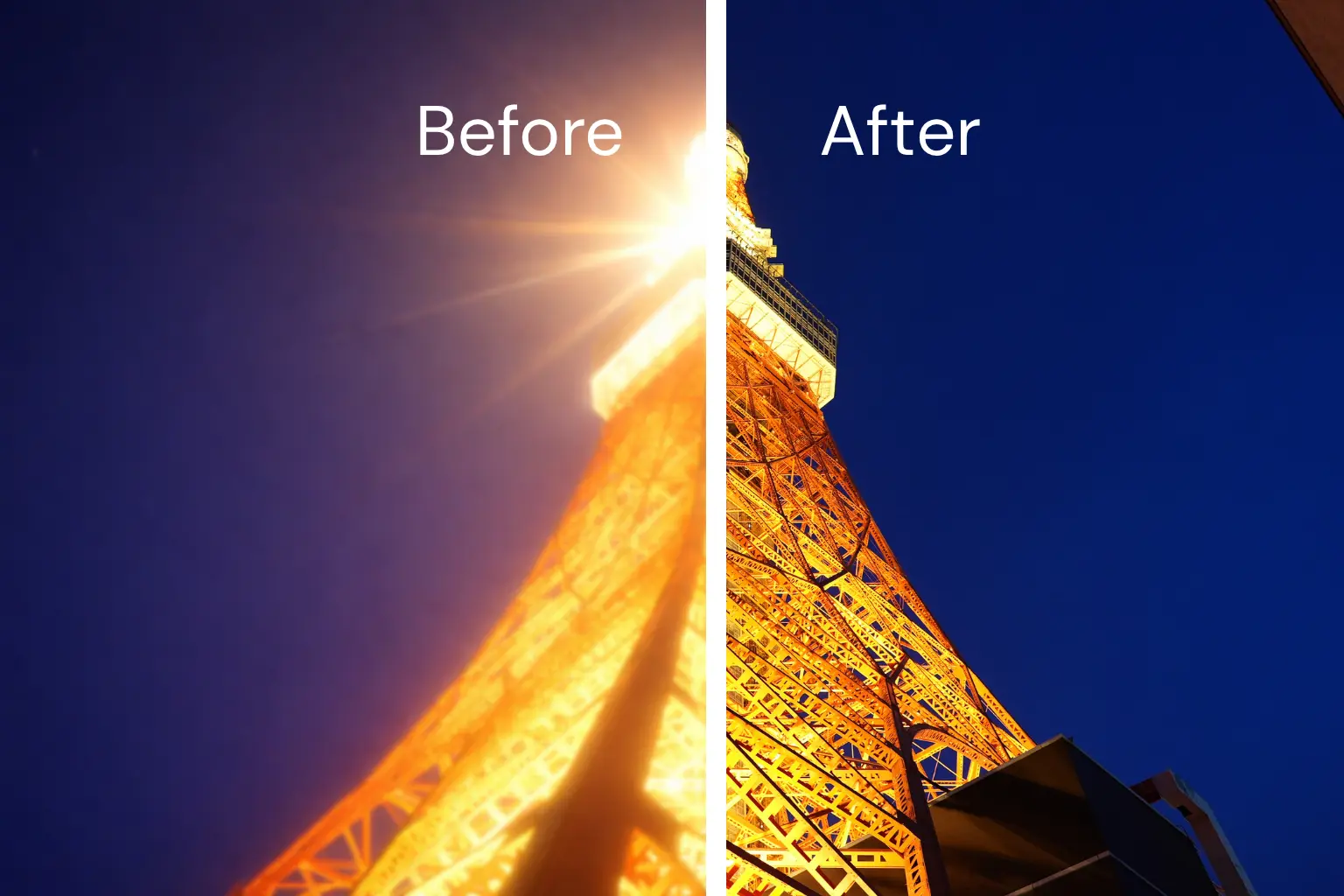
Portrait mode makes a face look sharp while softening the background. Photographers call the look of that blur bokeh. On a traditional camera, a wider aperture tends to make the depth of field shallower. A smaller aperture generally brings more of the scene into focus. The iPhone simulates that portrait effect and lets you dial the blur up or down.
I like that look in a photo. In everyday life, I want to see the road ahead and glance down at the dashboard without reaching for glasses. That’s the idea behind an extended depth of focus lens. It gives you a wider range of usable focus, especially from distance to arm’s length. You may still want readers for fine print. The camera analogy describes how much looks sharp at once. PureSee extends focus through the shape of its optic.
What excites me about PureSee
Contrast sensitivity is your ability to pick out details that don’t stand out sharply, like a gray curb in dim light. PureSee improved arm’s-length vision in the FDA-reviewed trial while keeping dim-light contrast sensitivity close to that of the standard monofocal lens under the conditions tested. Some contrast scores were lower, including on tests with glare. I still talk with patients about night vision, halos, and the possibility of using readers.
What’s the difference between refractive and diffractive lenses?
Refractive designs use the shape and power of the optic to bend light. PureSee uses a refractive design to extend focus. Diffractive designs use tiny steps in the optic to direct light to different foci or extend focus. PanOptix uses diffraction to provide multiple focal points.
These terms describe how the lens handles light. EDOF and multifocal describe what the lens is intended to do for your range of vision. An EDOF lens can use diffraction, as TECNIS Symfony does. The specific design and your eye both matter when discussing halos, glare, and reading vision.
These are examples by design, without a sales or performance ranking. FDA PureSee review · FDA Vivity Pro approval · FDA Envy review · Review of presbyopia-correcting lenses.
Full-range lens describes an implant designed to cover distance, arm’s length, and near. Specific optical designs and reading performance vary.
I often lean toward an EDOF lens, especially when distance and arm’s-length vision matter most and you’re comfortable using readers for fine print. PureSee is often the first EDOF option I discuss when glare is a major concern. The trade-off shows up in everyday situations, like reading a restaurant menu in dim light or seeing clearly on a road with bright oncoming headlights. AAO cataract practice guideline · ASCRS PureSee–PanOptix comparison
PureSee vs. PanOptix at a glance
Both aim to give you good distance and intermediate vision. PanOptix has the edge for close reading. PureSee had fewer light-related symptoms in a short-term comparison.
| Everyday task | PureSee EDOF | PanOptix trifocal |
|---|---|---|
| Distance vision Road signs | Strong | Strong |
| Intermediate vision Car dashboard or computer | Strong | ★ Edge in the one-month study |
| Near vision Reading a book or your phone | Useful near vision for some. Readers may help. | ★ Edge for close reading |
| Glare and halos Headlights at night | ★ Edge for fewer light effects | Glare and halos may be more noticeable. |
★ marks a relative advantage. “Strong” describes the intended range. Individual results vary, and either lens can cause glare or halos. The near-vision and light-effects findings come from a short-term retrospective comparison. ASCRS comparison · FDA PureSee review
PureSee vs. PanOptix for reading and night driving
TECNIS PureSee is a refractive EDOF lens. PanOptix is a trifocal designed to provide more near vision. In a short-term retrospective comparison presented at ASCRS, the PureSee group had less near vision and fewer light-related symptoms than the PanOptix group. I use that trade-off to guide the discussion. If you drive at night and are comfortable with readers for fine print, I often discuss PureSee. If reading without glasses matters most and your exam supports a trifocal, I discuss PanOptix and other full-range options. Either lens can produce halos. ASCRS 2025 abstract · FDA PureSee review
What can change my cataract lens recommendation?
Two patients can both want to read without glasses and leave my office with different lens recommendations. The decision starts with what they want to see, at what distance, and in what light. The exam tells me which trade-offs their eyes are most likely to tolerate.
| What I look at | How it changes the decision |
|---|---|
| Reading distance, lighting, and night driving | I ask patients to show me where they hold their phone or how far they sit from their screen. If the goal is the broadest range without glasses and the exam supports it, I discuss multifocal and full-range lenses early. If the priority is limiting visual disturbances and readers are acceptable, PureSee often enters the discussion early. |
| Dry eye and repeatability | If the tear film makes the corneal maps or astigmatism readings inconsistent, I treat the surface and repeat the measurements before choosing the implant. If the map remains irregular after treatment, I reconsider which lens design the eye can support. |
| Corneal shape and higher-order aberrations | Aberrometry helps me look for optical irregularities such as coma. I weigh those findings with the corneal map and other measurements, especially when a patient has had refractive surgery or wants an implant that extends near vision. |
| Pupil size, chord mu, and centration | Chord mu is a distance measured on a scan between the pupil center and a fixation-related reference point. I interpret it alongside pupil size, corneal optics, and the rest of the exam. The position of the implant after healing is a separate measurement. A single preoperative number has limited value as a pass-or-fail rule. |
| Astigmatism and refractive target | If regular astigmatism is meaningful and measurements agree, I generally favor a toric implant. I also work out whether both eyes should aim for distance or one eye should have a modest near bias. |
| Macula, optic nerve, and prior surgery | Macular or optic nerve disease can change the expected benefit of a multifocal. With prior RK, LASIK, or PRK, I often bring up the Light Adjustable Lens because we can refine the prescription after surgery. |
ASCRS ocular surface algorithm · Clinical review of chord mu and IOL selection · AAO cataract guideline
How this plays out in clinic. Say you want a trifocal and your scans show a different amount or axis of astigmatism each time. I first work out why the numbers disagree. If treating the tear film makes the maps consistent and the rest of the exam supports a full-range implant, we can revisit the trifocal. If the map remains irregular or nighttime glare matters more to you than fine print, I may recommend a different lens.
Why I chose PureSee for members of my own family
They were concerned about glare. That told me which compromise mattered more to them. I chose PureSee because their priorities favored distance and arm’s-length vision, with the option of readers when needed. I ask patients the same question: Which would bother you more, putting on readers for fine print or seeing light effects around headlights?
I use the FDA-reviewed study results to set expectations. Some patients in my practice get more useful close vision than I initially counsel them to expect. I still plan for the possibility of readers for fine print or dim light. With PureSee, we choose the prescription target before surgery. Light Adjustable Lens guide · FDA PureSee review
Can PureSee help if reading without glasses is a high priority?
Yes, some patients get useful close vision with PureSee. I’ve used it in many patients who strongly wanted more near vision. We talk about what they want to read, how close they hold it, and whether they’d be comfortable using readers for small print or dim lighting. If the widest range without glasses is the overriding goal and the eye is a good candidate, I usually discuss a multifocal or full-range lens. PureSee is an option I discuss when patients also value distance and arm’s-length vision and can accept that they may still need readers. FDA PureSee clinical review
A case from my practice when retinal history changed the recommendation
One patient had a history of proliferative diabetic retinopathy and diabetic macular edema. Both were inactive when we discussed cataract surgery. He strongly wanted to read without glasses. Given his retinal history, I felt strongly that a diffractive multifocal was a poor fit. We had a long discussion about why I was cautious and how his retinal history limited what I could predict with an EDOF lens. After weighing those options, we proceeded with PureSee.
At a postoperative visit, he measured 20/20 on a distance chart. On a separate test, he read J2 with each eye tested individually, without correction, using a near card held at its specified distance. He was thrilled with the reading result. That was one patient’s result under our office testing conditions. I use the FDA-reviewed data to set expectations for near vision. Some patients do better than they expected, and I still counsel them to plan for the possibility of readers. I explain that PureSee can give some people useful near vision, but fine print may still require readers, and underlying retinal disease can limit vision even when the cataract surgery goes well. For patients with a similar retinal history, I make the recommendation based on their own exam, visual goals, and tolerance for uncertainty. AAO cataract practice guideline
What the FDA and ASCRS data tell us
- FDA PureSee data. In the pivotal study at six months, PureSee improved average distance-corrected intermediate vision at 66 cm by about 1.5 chart lines in the first eye compared with an aspheric monofocal control. In the same study, average distance-corrected near acuity at 40 cm in one eye was 0.34 logMAR with PureSee and 0.49 with the control. The FDA also reports an average of 0.35 logMAR (20/44) for uncorrected near vision in one eye at 40 cm, roughly J5 on a common near-acuity conversion. Jaeger print sizes vary by chart. Near acuity was a descriptive endpoint. These are trial averages under standardized conditions, and the J2 case used an office near card. AOA near acuity conversion table The study also documented reports of halos, night glare, and starbursts. FDA PureSee review, Tables 22, 35 and 40
- ASCRS meeting results. A short-term retrospective comparison presented at ASCRS in 2025 found less near vision and fewer light-related symptoms with PureSee than with PanOptix. The groups included 51 and 62 eyes. This was a conference abstract, which carries less weight than a large randomized head-to-head trial. At ASCRS 2026, J&J reported additional PureSee findings including a U.S. randomized comparison with a monofocal control. 2025 ASCRS abstract · Manufacturer’s ASCRS 2026 report
When a trifocal or full-range lens may make sense
When reading without glasses is the top priority and the eye is a good candidate, I discuss trifocal and full-range options. I don’t have a preferred trifocal brand. I choose based on your exam, how close you hold what you read, and the trade-offs you’re comfortable with.
Models I discuss include Alcon PanOptix (a trifocal), Johnson & Johnson TECNIS Odyssey (full visual range), and Bausch + Lomb enVista Envy (full range of vision). In my clinical experience, newer options such as Odyssey and Envy can give selected patients a more usable range across everyday working distances than some of the multifocals I used in the 2010s. That’s my clinical impression. How a lens performs at your reading distance, in your lighting, and with your eye health matters more to me than a brand ranking. CMS lens model listing · J&J lens classifications · FDA enVista Envy review
How astigmatism and surgical technique affect lens choice
When regular corneal astigmatism is meaningful and the measurements agree, I generally favor a toric implant if a suitable model is available. Some EDOF and multifocal lenses have toric versions. Learn about toric lenses on our cataract surgery page · ESCRS guideline
I often use femtosecond laser because it lets me plan the size and position of the capsule opening. Conventional and laser-assisted surgery can both produce good outcomes, and centration also depends on the eye’s anatomy and healing. See how we perform cataract surgery · FACT trial
How much do EDOF and multifocal cataract lenses cost in Atlanta?
Your total depends on the lens, the services in your plan, and your insurance benefits. Original Medicare generally covers medically necessary cataract surgery with a conventional implant, subject to deductible and coinsurance. Choosing an EDOF or multifocal lens generally adds an out-of-pocket upgrade. Ask for a written estimate that shows the covered surgery, the elective upgrade, and your expected share. CMS Medicare Vision Services
WatchDr. Tran explain cataract lens options.
What to bring to your consultation. Bring an example of the print you want to read and tell me how often you drive after dark. If you’ve had RK, LASIK, or PRK, ask how that changes the lens calculation and whether a Light Adjustable Lens makes sense for you. Start with our cataract surgery walkthrough.
Schedule a cataract lens consultation. I see patients at Stratus Eye in Duluth, Georgia, in Gwinnett County. I operate at Northside Hospital Haw Creek and select accredited surgery centers. Request a consultation or call 470-403-2020.
Schedule a cataract lens consultationDisclosure from Dr. Tran. I’m an independent ophthalmologist with no financial affiliation with an ambulatory surgery center. I don’t consult for surgical lens manufacturers or receive payments for choosing a particular lens. I recommend the lens I believe best fits your eyes and goals.
Cataract lens FAQs
What is an EDOF cataract lens?
An extended depth of focus lens gives a wider range of usable focus, especially for distance and tasks at arm’s length like using a computer.
What is a multifocal or trifocal cataract lens?
A multifocal intraocular lens uses multiple focal points. A trifocal is designed to cover distance, arm’s length, and near.
How are refractive and diffractive lenses different?
A refractive optic uses its shape to bend light. A diffractive optic uses tiny steps to direct light to different focal points or extend focus. Some EDOF designs use diffraction.
What did the PureSee vs. PanOptix study find?
In a retrospective ASCRS comparison at one month, PanOptix had better intermediate and near acuity, the study detected no significant distance difference, and PureSee patients reported fewer glare and halos. Read the ASCRS abstract.
Does Dr. Tran prefer PureSee or a trifocal?
I often lean toward EDOF when distance and arm’s-length vision are priorities and a patient is comfortable using readers. For patients who want the widest range without glasses and whose exam supports a trifocal, I discuss their options. I don’t have a preferred trifocal brand.
Can PureSee still cause glare or halos?
Yes. Both EDOF and trifocal lenses can cause glare or halos. I ask how much you drive at night and how you feel about those trade-offs.
Can I see 20/20 at distance and still need readers?
Yes. A distance chart measures a different task from reading a book or phone. Print size, lighting, and the distance you hold it all matter.
Can I have a toric lens and still get more range of vision?
Yes. Some EDOF and multifocal lenses also come in toric versions for regular corneal astigmatism.
How does dry eye affect lens selection?
An unstable tear film can make corneal measurements inconsistent. I treat the surface and repeat the measurements before committing to a lens when the numbers disagree.
Can I get EDOF or a trifocal after LASIK or RK?
It depends on your corneal shape, eye health, and how predictable the measurements are. I often discuss the Light Adjustable Lens early for patients with prior LASIK, PRK, or RK.
How much do premium cataract lenses cost?
The out-of-pocket amount depends on your lens, services, and insurance. Original Medicare generally covers medically necessary cataract surgery with a conventional lens, subject to deductible and coinsurance. Ask for a written estimate for the elective upgrade.
Where can I get a cataract lens consultation near Johns Creek or Suwanee?
Stratus Eye is at 3820 Pleasant Hill Road, Suite 5, in Duluth, Georgia. We see patients from Duluth, Johns Creek, Suwanee, and the rest of Gwinnett County. Schedule a consultation or call 470-403-2020.