Light Adjustable Lens After Cataract Surgery
By Jeffrey Tran, MD, cataract surgeon at Stratus Eye
The Light Adjustable Lens (LAL) lets us fine-tune your prescription after cataract surgery using in-office light treatments. I often bring it up early for patients who have had LASIK, PRK, or radial keratotomy (RK). When past surgery makes the starting lens calculation less predictable, I value being able to measure how the eye actually heals and adjust the lens afterward. That flexibility comes with extra visits and the need to wear special UV-protective glasses. FDA device review · RxSight patient guide
Why I often favor LAL after LASIK, PRK, or RK
The cornea is the clear front surface of the eye. LASIK and PRK reshape it, and RK changes its shape through radial incisions. Those changes can make the power of a cataract implant harder to predict, even with modern measurements. With LAL, I still do the work up front to choose a starting power. After surgery, I can use your measured prescription and your feedback to refine the result within the lens’s adjustment range. LASIK/PRK outcomes study · RK outcomes study
RK gets its own conversation. Some patients see differently in the morning and later in the day. Before we lock in the lens, I want to know whether the prescription is stable enough to act on. An adjustment can refine the implant’s prescription. Irregular corneal optics and fluctuations can still limit the quality and consistency of vision. For a patient with both issues, I explain what I expect to improve and what may still require glasses or contact lenses. RK outcomes study
A published example of LAL after RK
In a published case, a patient with extensive prior RK received Light Adjustable Lenses in both eyes. The team used postoperative light treatments to refine each eye’s prescription before locking it in. For a patient after RK, the practical question is whether repeated measurements are stable enough to guide an adjustment. The published case describes one patient, and the timing depends on how each eye heals. Cornea Open case report
What the studies found
- In a small series of 34 eyes with prior LASIK or PRK targeted for distance, 28 eyes (82%) reached 20/20 or better without distance glasses, and 33 (97%) were within half a diopter of plano, meaning close to a zero distance prescription. Wong et al.
- In a retrospective study of 94 prior-RK eyes targeted for distance, 70 eyes (74%) reached 20/20 or better without distance glasses and 83 (88%) were within half a diopter of the intended result. These studies describe different patient groups and cannot predict an individual result. Webster et al., Journal of Cataract & Refractive Surgery
The original FDA pivotal trial excluded most eyes with previous corneal surgery. The numbers above come from later studies of patients with those histories. I review current labeling, eye health, and your ability to return for treatment before recommending the lens. FDA pivotal study eligibility and labeling
What happens between surgery and lock-in?
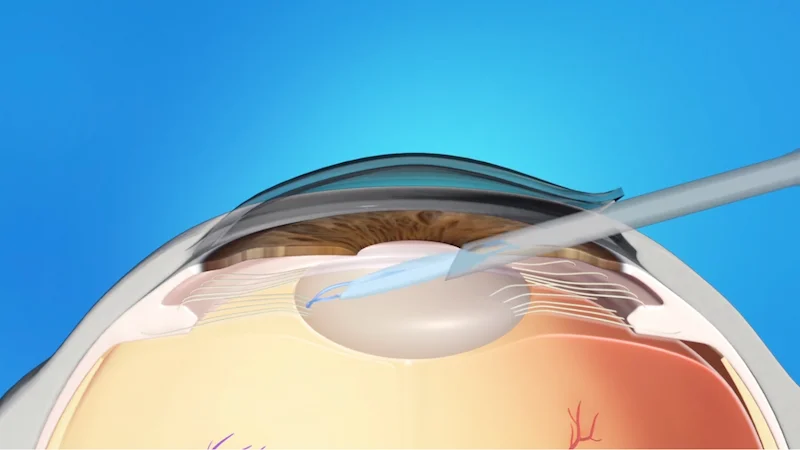
- Implant the lens. I remove the cloudy natural lens and place the adjustable implant during cataract surgery. See how cataract surgery works at Stratus Eye.
- Let the eye heal and remeasure. Once the prescription is ready to assess, I check how you see at distance, at the computer, and up close. Tell me which tasks still send you looking for glasses.
- Adjust the prescription. We use a light treatment in the office to change the implant’s power within its treatment range, including eligible amounts of residual astigmatism. We can discuss aiming both eyes toward distance or giving one eye a modest near bias if you tolerate the difference between eyes.
- Lock in the result. Once we’ve settled on a target and the measurements support it, we use lock-in treatments to fix the lens power. Follow the prescribed UV-glasses schedule through 24 hours after the final lock-in. The exact visit schedule depends on healing and your measurements. RxSight postoperative guide
Will I still need reading glasses?
If we aim both eyes for distance, plan on readers for close work. A modest near target in one eye can reduce how often you reach for readers, but we weigh that against how you feel with the eyes set differently. I ask patients to think about their actual day. A laptop at arm’s length and fine print on a medicine bottle are two different goals. RxSight postoperative guide
Can LAL fix all the effects of prior RK or LASIK?
LAL can fine-tune the implant’s prescription. Corneal irregularity, glare from prior corneal surgery, and fluctuating vision can still affect what you see. With RK, I pay particular attention to whether repeat measurements are stable enough to guide the final lock-in. RK clinical study
Who may be a poor candidate for the Light Adjustable Lens?
I review your retinal health, medications, and ability to follow the treatment schedule. The LAL system’s approved use excludes preexisting macular disease. The manufacturer lists certain UV-sensitizing or retina-toxic medicines, a history of herpes eye infection, uncontrolled eye movements, and an inability to follow the light-treatment or UV-glasses instructions as reasons the system should not be used. Bring your medication list to the consultation. RxSight safety information
When do LAL adjustments start, and how long do I wear UV glasses?
The first light treatment typically starts at least three weeks after surgery, once the eye is ready. RxSight describes one to three adjustment treatments followed by two lock-ins. You wear the prescribed UV-protective glasses during waking hours until 24 hours after the final lock-in, commonly around four to five weeks in the manufacturer’s guide. Your schedule can run longer if measurements or healing need more time. RxSight postoperative guide · RxSight treatment booklet
Does Medicare cover the Light Adjustable Lens?
Original Medicare generally covers medically necessary cataract surgery with a conventional implant, subject to applicable deductible and coinsurance. Choosing an adjustable lens can add out-of-pocket charges for the upgrade and related services. Ask us for a written estimate for your plan before choosing. CMS Medicare Vision Services
WatchLight Adjustable Lens Compared to Multifocal for Cataract Surgery.
What to bring to your consultation. If you have old LASIK, PRK, or RK records, bring them along. Tell us if your vision changes during the day and whether the extra light-treatment visits fit your schedule. If your priority is reading and seeing across several distances without glasses, compare EDOF and multifocal lenses.
Schedule a cataract lens consultation. I see patients at Stratus Eye in Duluth, Georgia, in Gwinnett County. I operate at Northside Hospital Haw Creek and select accredited surgery centers. Request a consultation or call 470-403-2020.
Schedule a cataract lens consultationDisclosure from Dr. Tran. I’m an independent ophthalmologist with no financial affiliation with an ambulatory surgery center. I don’t consult for surgical lens manufacturers or receive payments for choosing a particular lens. I recommend the lens I believe best fits your eyes and goals.
Light Adjustable Lens FAQs
What is the Light Adjustable Lens?
It is a cataract implant whose prescription can be fine-tuned after surgery with special in-office UV light treatments.
Why consider LAL after LASIK, PRK, or RK?
Prior surgery can make the starting implant power harder to predict. LAL lets me refine the prescription after I measure how your eye actually heals.
Can LAL fix fluctuations after RK?
Adjusting the implant can refine your prescription. The shape of the cornea and day-to-day fluctuations can still affect what you see.
When is the first light adjustment?
RxSight describes a first treatment typically at least three weeks after surgery. I wait until the eye is ready, which may take longer after RK.
How many light treatments will I need?
RxSight describes one to three adjustment treatments followed by two lock-ins. Your schedule depends on healing and your prescription.
How long do I wear the UV glasses?
Wear the prescribed UV-protective glasses while awake until 24 hours after your final lock-in, following your care team’s instructions.
What does locking in the lens mean?
Lock-in treatments fix the implant’s prescription after we settle on the vision target.
Can LAL correct astigmatism?
Within its treatment range, LAL can adjust eligible amounts of residual astigmatism. We review the cornea and your measurements before choosing a plan.
Will I still need reading glasses?
Plan on readers for close work if both eyes are set for distance. Some patients choose a modest near target in one eye and may use readers less often.
Who may be a poor candidate?
We review macular health, medications, and whether you can wear the UV glasses and attend adjustment visits. Certain eye conditions and medicines can make the system unsuitable.
Does Medicare cover the Light Adjustable Lens?
Original Medicare generally covers medically necessary cataract surgery with a conventional implant, subject to deductible and coinsurance. Choosing LAL can add out-of-pocket costs for the upgrade and related services.
Where can I get a cataract lens consultation near Johns Creek or Suwanee?
Stratus Eye is at 3820 Pleasant Hill Road, Suite 5, in Duluth, Georgia. We see patients from Duluth, Johns Creek, Suwanee, and the rest of Gwinnett County. Schedule a consultation or call 470-403-2020.